
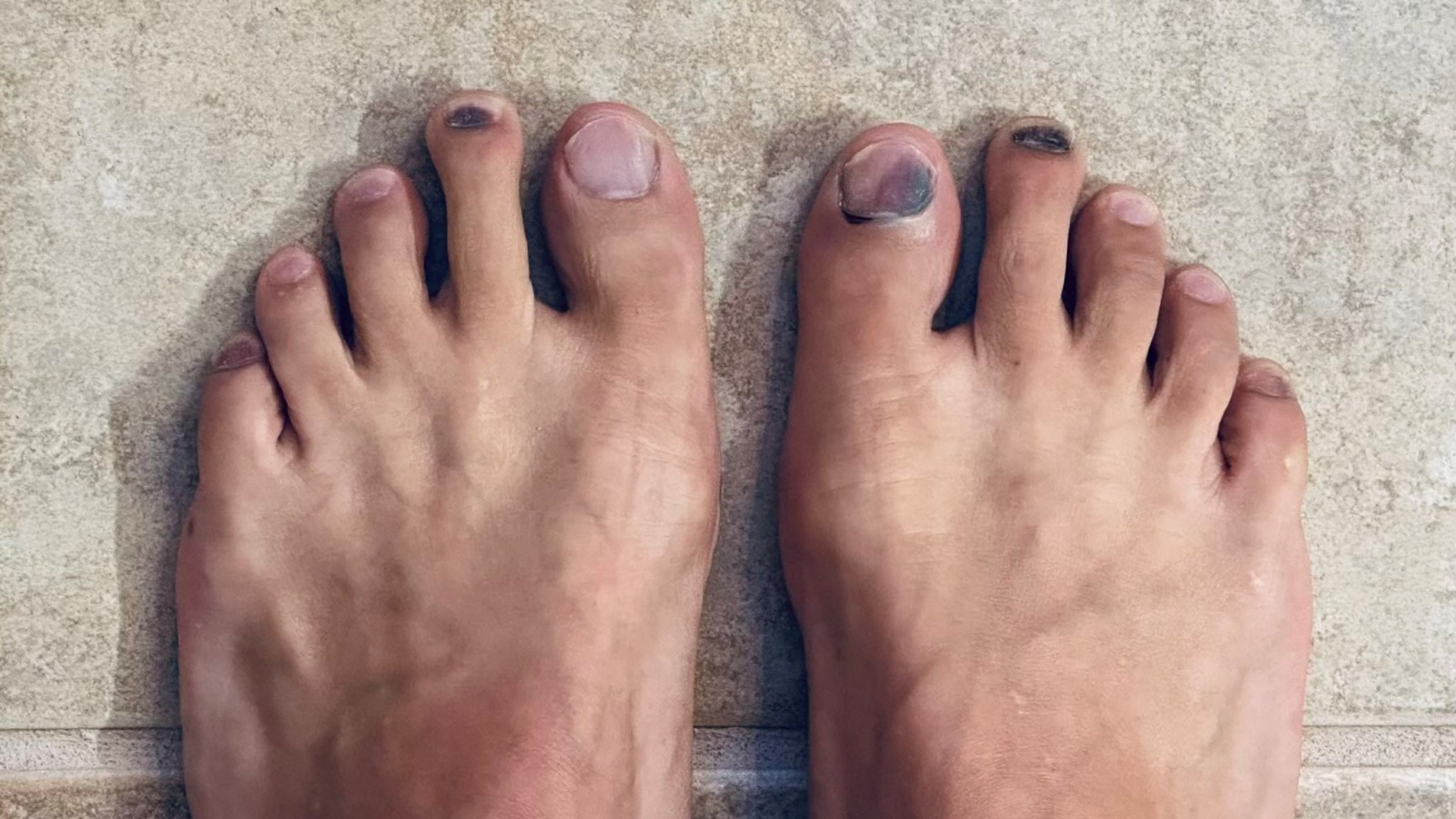
Many people turn to online forums like Quora for medical advice, which may not be very reliable. One such user posted a query about his nails: ‘I have dried blood in my toenail. It’s been 7 months. How do I take it out?’ So, we reached out to Dr Sunil Kumar Prabhu, Consultant – Dermatology at Aster RV Hospital, to understand what persistent toenail discolouration actually means and whether it needs intervention.
Why dried blood under a toenail can last for months
Dr Prabhu describes the condition as a subungual hematoma, which happens when blood collects beneath the nail due to trauma, which might not always be dramatic or memorable. “It can be something obvious like stubbing your toe or dropping a heavy object, but it can also occur due to subtle, repetitive factors such as wearing tight footwear, ill-fitting shoes, or long periods of running or walking.”

Since these injuries are often minor, many people don’t associate them with nail changes. “In many cases, patients do not recall any specific injury at all,” he says. Another reason the discolouration seems stubborn is nail growth itself. “Toenails grow very slowly, especially in adults. Because of this, the trapped blood can remain visible for several months and only gradually move forward as the nail grows.”
But how can one differentiate dried blood from other nail conditions? “Dried blood usually appears reddish-brown to dark purple or black, and one key feature is that it moves forward over time as the nail grows,” says the dermatologist. In contrast, “nail fungus typically presents with yellowing, thickening, brittleness, and debris under the nail,” making the two conditions clinically distinct.
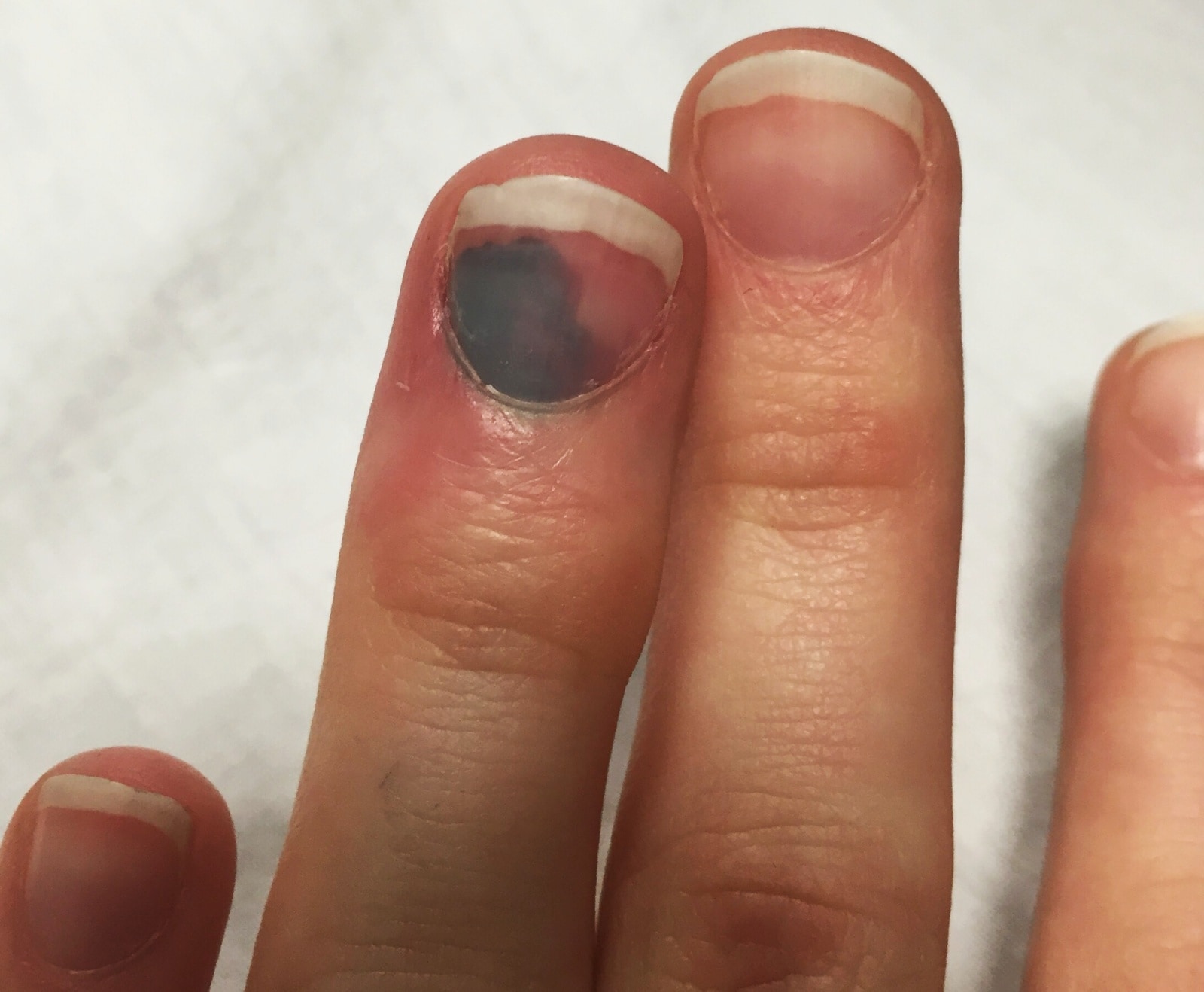 In Frame: subungal hematoma of the finger (image: wikimedia commons)
What to do after seven months — and what not to do
When it comes to treating the condition, Dr Prabhu says, “It is not advisable to try removing dried blood from beneath the nail at home.” He warns that “scraping, piercing, or cutting into the nail can lead to infections, nail damage, delayed healing, and in some cases, permanent nail deformity.” Home remedies, he adds, may also worsen pain or complicate recovery.
For most people, intervention isn’t required. “In the majority of cases, no active treatment is needed, as the dried blood will gradually grow out with the nail,” says Dr Prabhu. Toenails typically take 9 to 12 months, and sometimes longer, to fully replace themselves. Simple measures such as keeping the nail trimmed, wearing comfortable footwear, and avoiding further trauma can support natural healing.
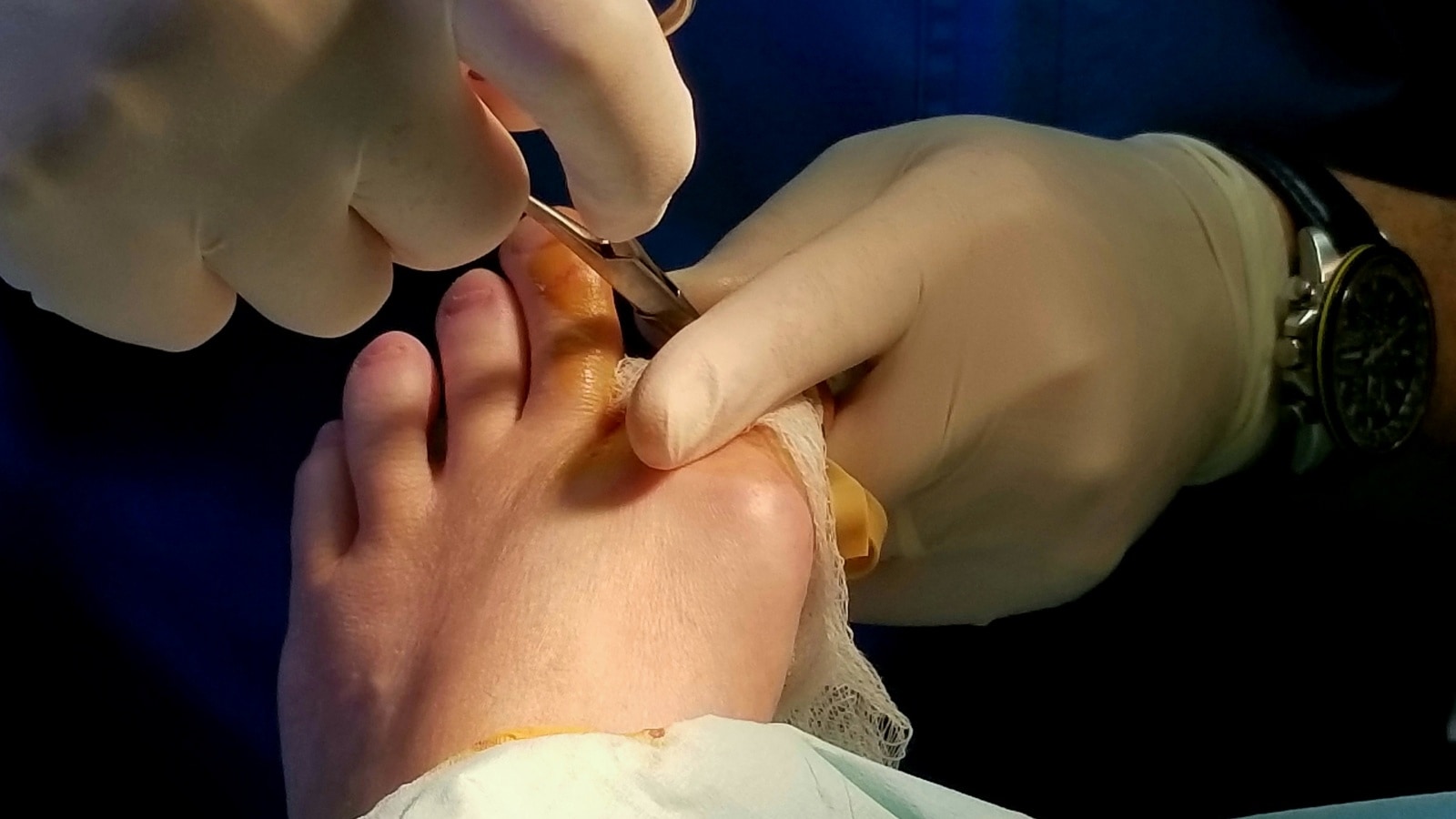
However, medical attention may be needed in certain situations. “If the nail becomes loose, painful, or cosmetically concerning, a doctor may recommend partial nail trimming or removal under sterile conditions,” he notes. If the discolouration does not clear over time, treatment options may include medical nail trimming, partial or complete nail removal, or further investigations to confirm the diagnosis.
Story continues below this ad
“Identifying and addressing the underlying cause—whether it’s repeated trauma, footwear issues, or a nail disorder—is essential to prevent recurrence,” Dr Prabhu emphasises.
DISCLAIMER: This article is based on information from the public domain and/or the experts we spoke to. Always consult your health practitioner before starting any routine.