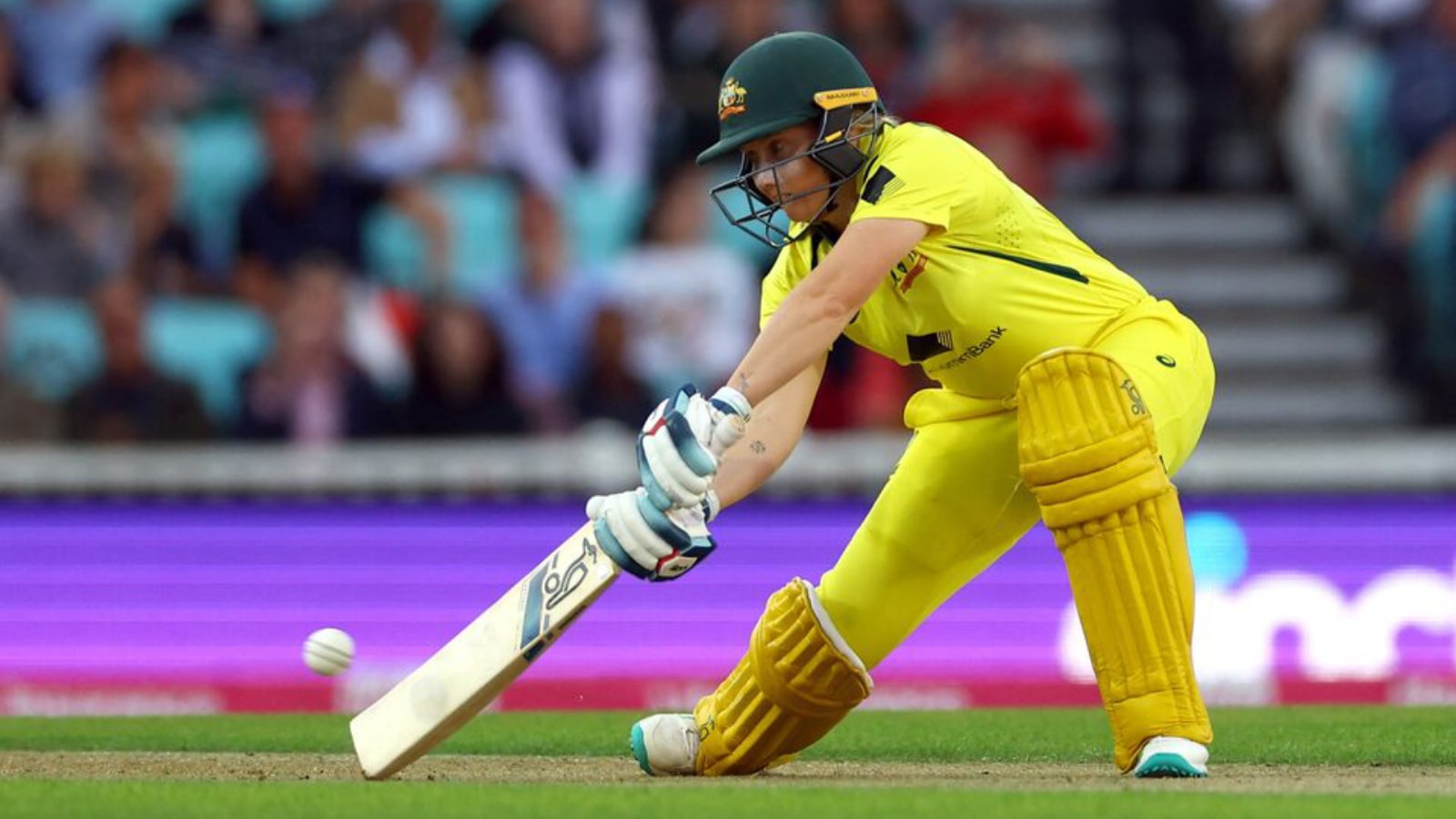


When Australian batsman Steve Smith missed the third Ashes Test at Adelaide earlier this month, it was the second time that the Australian missed a Test in Australia’s last six Test matches. The 36-year-old who had earlier too faced symptoms of vertigo early in his career too, had to opt out of the Adelaide Test with Usman Khawaja coming into the side as Smith’s replacement. Having regained fitness and named in the Australian squad for the fourth test at Melbourne, Smith has now spoken about how he was not feeling great ahead of the Adelaide Test and had spoken with Australian coach Andrew McDonald about this.
“As soon as I started batting in Adelaide I didn’t feel great, wasn’t tracking the ball well, had a bit of head stuff going on. Three days out, hit again, played golf that afternoon. I’d already spoken to Ron [coach Andrew McDonald] and was like ‘I don’t feel great’, so he goes ‘just try to get out and do some things and see how it goes’. So I played that afternoon, felt awful that night. I felt terrible the next day, didn’t hit or do much. Then I hit the next morning and felt ordinary again. I tried the next day, morning of the game and I just wasn’t … I couldn’t track the ball. Felt dizzy. When I had my head back and come up (to face), I needed to recalibrate every time my head came up, it was all over the place, and in the end we made the right decision. I felt awful that day. And playing in that heat wasn’t going to help me – those first two days were bloody hot. So, yeah, I sort of got to the decision, which was the right one, although I think I would’ve liked to bat on that wicket.” Smith told The Age on Wednesday.

In 2022, Smith had suffered a concussion in a fielding mishap during the Second T20I against Sri Lanka at Sydney and had also talked about repeat of the debilitating vertigo symptoms. Prior to the Adelaide test, Smith had scored 103 runs with one half-century in the series. Smith talked in detail about how he had been facing the issue in the past and how he has been doing some training exercises apart from wearing goggles with a laser on it. “I’ve had a few different things with my head in the past, head knocks, some vestibular stuff, some vertigo stuff. It was more the vestibular stuff this time. It wasn’t the room spinning with the vertigo, which I’ve had previously, but it’s the eye-tracking and not being able to focus on things, particularly moving targets. I felt really slow, really heavy in the head, tightness in the neck and not much fun. I’m still talking to people about it. I’ve got some training exercises I need to do, tracking things, wearing goggles with a laser on it, drawing different shapes and things like that. So it’ll be a bit of that, strengthening my neck. Fingers crossed it’s gone and never comes back. That would be nice,” added Smith.’
Smith had batted in the day-night Brisbane Test with eye patches under his eyes to adjust to the conditions. Smith spoke about the patches working 100 percent for him doing the Test. “I felt like I batted pretty well in Brisbane, even with the pink ball, it’s not been one of my strengths in the past. The black things I was wearing under my eyes, I’m 100 per cent certain they worked, and I think I’ll be bringing them out in normal night games against the white ball as well,” said Smith.
The Australian batsman also talked about how he sees England coach Brendon McCullum comments about ‘overpreparing’ for The Ashes and empathised with the England coach. “I think sometimes, particularly when you lose, you almost try too much and too hard and you lose sight of the fact that you want to be mentally fresh when you go in the middle. Sometimes you just try too hard to get yourself into that frame of mind, and you’re actually cooked when you go out to the middle to try to perform under pressure,” said Smith.